After decades of rapid reviews, DA Ramsey hasn't issued a report in years
by Dave Waddell | Posted August 31, 2025
The CHP report for the 2022 shooting is still not finalized.
Butte County’s system for investigating officer-involved shootings has stalled without explanation, leaving several cases unresolved and marking a sharp departure from a pattern of rapid exonerations stretching back decades.
District Attorney Mike Ramsey, who oversees such investigations, has issued no reports on police killings since 2020 or on non-fatal police shootings since 2017, according to an extensive review of county records.
A number of cases remain open as a result.
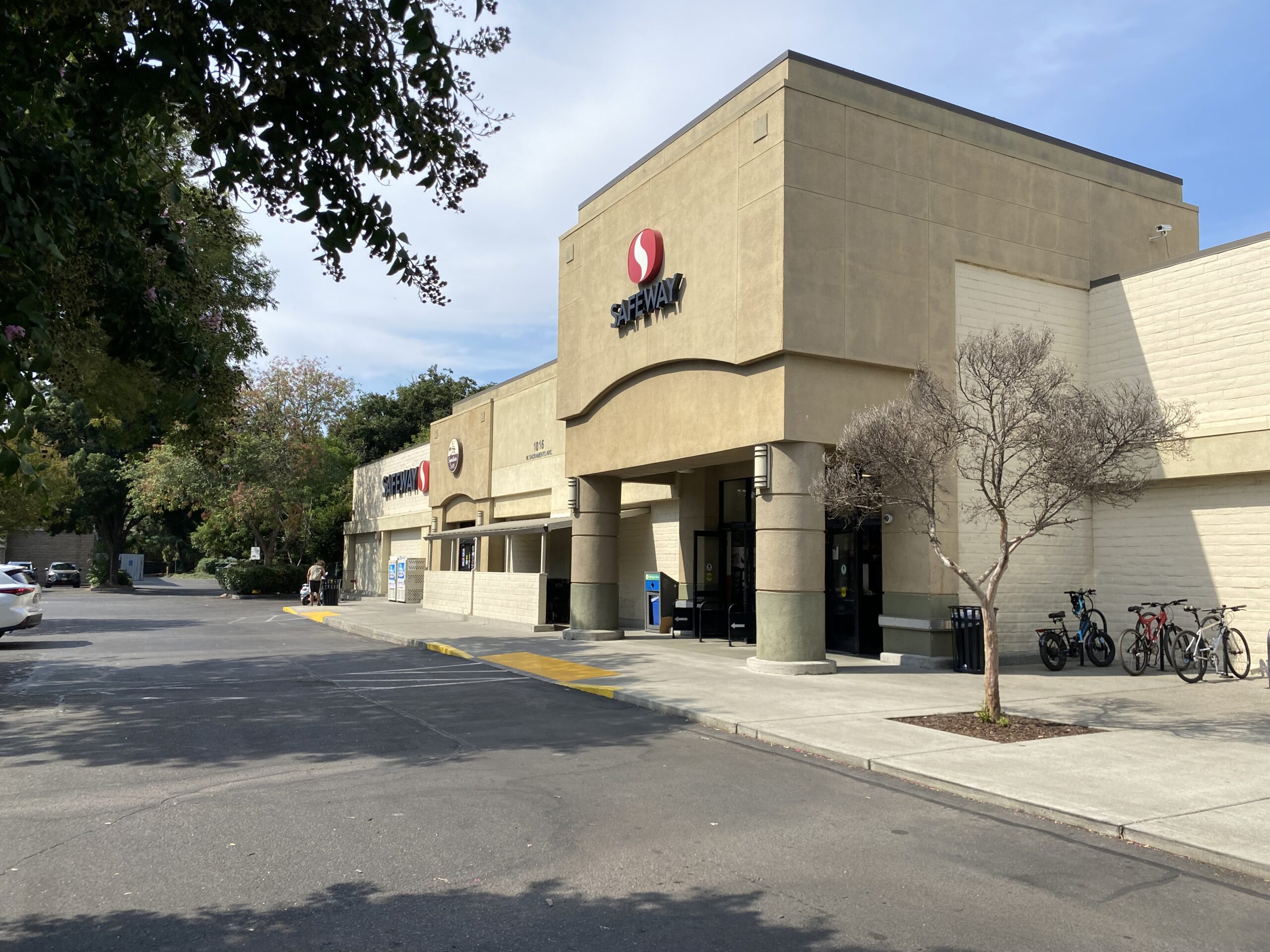
In November 2022, a California Department of Alcoholic Beverage Control agent shot four times, missing 19-year-old Madison Sells during a confrontation in a Chico Safeway parking lot. Ramsey’s failure to make a charging decision forced ABC to abandon plans to provide psychological support for the officers involved, according to emails obtained under a Public Records Act request. Nearly three years later, Ramsey still has not ruled on the case, leaving all reports stamped as “drafts.”
On the second day of 2023, 33 days after the ABC shooting, three Gridley police officers fired 31 times in killing Baltazar Rubio, who was in mental crisis and allegedly pointing an unloaded gun at police. The officers’ final few shots came with Rubio on the ground after a four-second pause in the gunfire. It has been more 2½ years since the shooting, with silence on the case from Ramsey.
Also missing is any information on Chico PD’s fatal shooting six months ago of Michael Oxley as well as on the May 8 killing of Valerie Ann Cadwallader, by Butte County sheriff’s deputy Tyler Dentinger. The Oxley shooting involved four officers, including two sergeants previously involved in controversial killings that Ramsey had cleared. The City of Chico last week issued a blanket denial of a Public Records Act request for investigative reports about the Oxley shooting, saying the incident is still under investigation.
Seth Stoughton, one of the nation’s foremost experts on police uses of force, said officer-involved shooting investigations can be complicated and time-consuming.
“There may be multiple witnesses who need to be interviewed, potentially multiple times, as well as physical evidence that may need to be subjected to forensic examination,” said Stoughton, an ex-cop and professor of law who directs the Excellence in Policing & Public Safety Program at the University of South Carolina. “And they aren’t always the highest investigative priority, since they are usually assumed to not have broader public safety implications.”read more
New videos reveal details kept secret by DA Ramsey
by Dave Waddell | Posted August 22, 2021
Tyler Rushing
(Editor: This is part 2 in a three-part series on newly released documents and video obtained through Public Records Act requests and with the help of an attorney. Read part 1 here.)
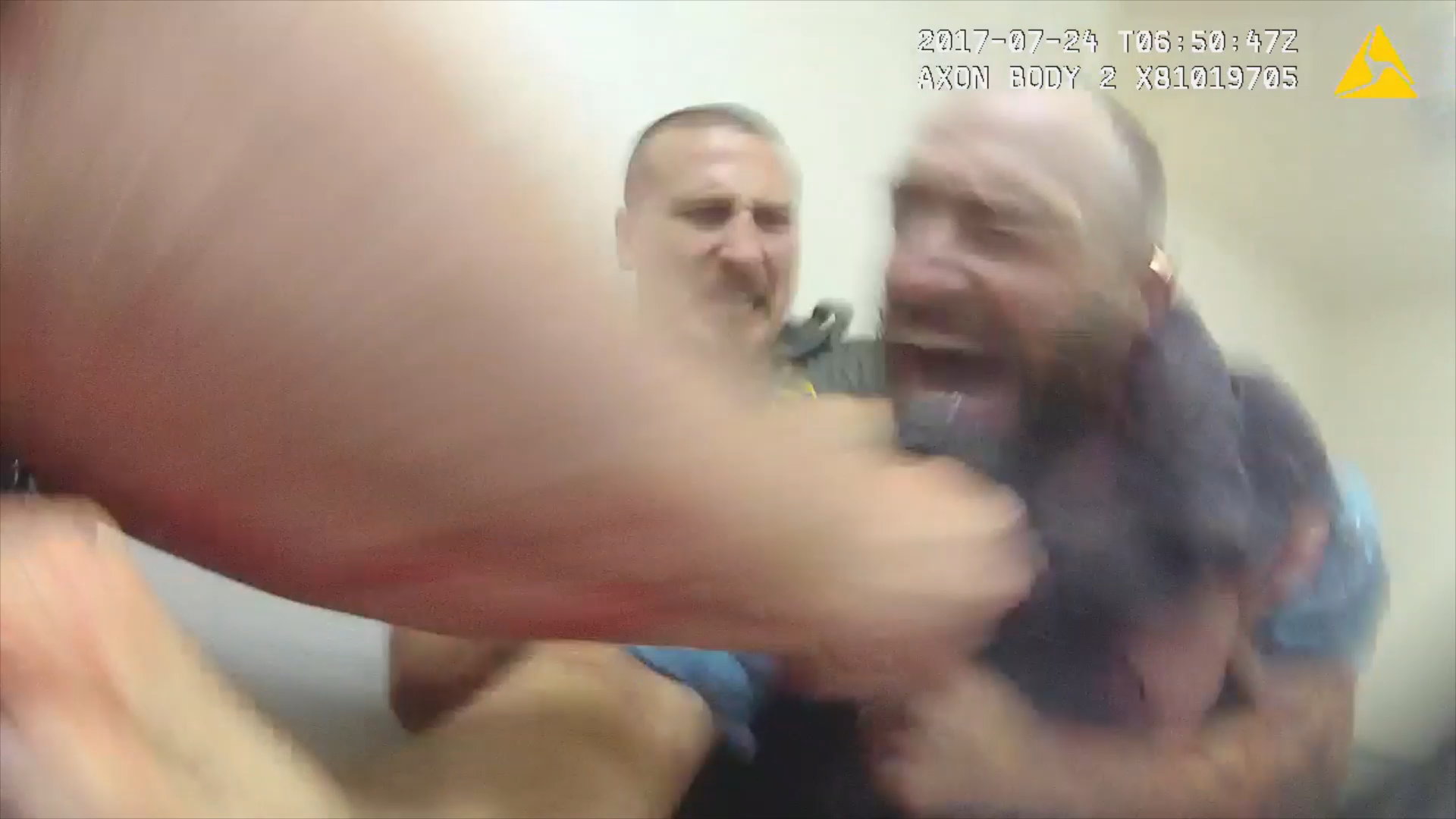
A Butte County sheriff’s deputy had both his hands on the flailing, severely wounded Tyler Rushing and was about to “sweep” him to the floor when Chico police Sgt. Scott Ruppel rushed forward and shot Rushing twice at nearly point blank range.
That’s one of the interesting details that emerge in newly released video related to the July 23, 2017, killing of Rushing on the site of a downtown business.
Deputy Ian Dickerson, who was holding Rushing when the sergeant fired, reported that his initial concern was whether the first bullet had gone through Rushing and into his own arm, which was draped across Rushing’s shoulder. Ruppel shot Rushing first in the trachea and then in the upper back.
Dickerson’s statement to investigators that Rushing was being held when shot – which is supported by body-worn camera evidence — was not included in Butte County District Mike Ramsey’s official report on the shooting. The DA’s report, which runs on for 16-single spaced pages, is more focused on what Rushing was doing in the weeks, days and hours before he was killed than on the particulars of his killing.
Ramsey’s report also left out numerous other facts and statements that are coming to light with the release by Chico PD to this reporter earlier this summer – under threat of a lawsuit – of eight videotaped interviews. Included are recordings of Ruppel and Dickerson being questioned by detectives.
Scott Rushing of Ventura, Tyler’s father, said none of the newly released video was turned over to the Rushing family during the discovery phase of their wrongful-death lawsuit against the city. Rushing said the withholding of the videos was unethical if not illegal and served to weaken the family’s case. Chico Police Chief Matt Madden and attorneys representing the city have declined comment, citing the ongoing litigation.
Among other details the video interviews have helped expose that are conspicuous by their absence from Ramsey’s report:
–Ruppel believed, after Rushing struck him in the neck with a ballpoint pen, that Rushing “chuckled” and “laughed” in the sergeant’s face with satisfaction. If Rushing did any laughing, no other officer reported seeing it and no such emotion was captured on video from multiple body-worn cameras. Dickerson described Rushing as angry.
Because Rushing had been weakened by significant blood loss, was in severe pain from the chest wound, and was fending off a biting dog, these claims raise questions about Ruppel’s truthfulness or state of mind, said Scott Rushing. “Tyler was in no mental or physical condition to laugh,” he said.
–Just prior to the pen strike, Ruppel estimated he choked Rushing for eight seconds, which turned out to be the exact length of time that Ruppel — three weeks later — choked a handcuffed and seat-belted-in suspect in the back of a police SUV. Ruppel was acquitted by a jury of a misdemeanor assault charge in the second incident, but it may have hastened his retirement at age 51 from Chico PD. Scott Rushing has said that Ruppel “lost his cool” in both cases.
–Before he pulled his Glock and shot Rushing, Ruppel said he knew he was not badly hurt by the pen strike “because there wasn’t enough pain for me to go down.” According to Ramsey’s report, “Ruppel said he believed the subject was out of control of the officers and was an immediate mortal danger to them.”
However, the photo accompanying this story (above) was stilled from officer Cedric Schwyzer’s body cam video. It shows that when Ruppel first fired, Schwyzer was behind and to the right of Ruppel, while Dickerson was behind and to the right of Rushing. Dickerson was wearing light blue surgical gloves and can be seen holding Rushing at the instant he was first shot, consistent with the deputy’s statements to investigators.
–After pausing 1 2/3 seconds between shots, Ruppel said he fired the second round because Rushing “wasn’t really going all the way down.” That may have been because Dickerson still clung to Rushing’s wrist. Dickerson said he thrust Rushing to the floor after Ruppel’s second shot. “I have control of his right arm; I’m not going to let it go,” Dickerson told investigators of his thinking in the restroom, which was made slippery by a mix of Rushing’s blood with water from a broken toilet. “I never lost control of that [wrist] throughout the whole situation.”
Ruppel, who reportedly lives in Wyoming, could not be reached for comment.
DA Ramsey did not respond to multiple email inquiries asking for an explanation about why his report didn’t mention (1) that Dickerson was holding and preparing to “toss” Rushing when Ruppel shot Rushing, (2) that Ruppel said he knew he wasn’t seriously hurt by the pen strike when he shot Rushing, and (3) that Ruppel thought Rushing was laughing at him in a mocking manner.
Seth Stoughton, a former cop and Florida state investigator and one of the nation’s foremost experts on police use of force, said some “pretty significant factual discrepancies” exist between Ruppel’s and Dickerson’s accounts of the shooting.
“If one witness says one thing and one says something else, the investigator’s job is to figure out which one is true to the extent that they can and why there’s a discrepancy,” said Stoughton, who teaches law at the University of South Carolina. If the two accounts are mutually exclusive and investigators “just let it lie, you’re doing a crap investigation.”
On the night he died, the oddly behaving 34-year-old Rushing was first shot by private security guard Edgar Sanchez after attacking and cutting Sanchez’s arm with a flower pot at the closed business. For at least 20 minutes, Ruppel calmly tried to talk Rushing out of the restroom into which he had fled, but got little response beyond Rushing’s loud moaning from the pain of his serious chest wound. Police eventually busted in with Dickerson’s canine Tig, which bit Rushing up and down his body, including between his legs and deep into his calf.
Rushing is believed to have hit officer Schwyzer, who was holding a ballistic shield, in the head with a piece of porcelain from a broken toilet. Then, as he flailed against Tig’s assault, Rushing struck Ruppel in the neck with a Chico PD-issued ballpoint pen pulled from Schwyzer’s shirt pocket. Ruppel then backed away, put his left hand over where Rushing had struck him, pulled his Glock with his right hand, and hurried forward to shoot Rushing. Schwyzer’s head cuts required nine stitches, while the pen strike did nothing more than break Ruppel’s skin.
Sgt. Ruppel was interviewed with his attorney present several hours after the shooting by Patrick McNelis, one of Ramsey’s investigators, and Jim Beller, a Butte County sheriff’s detective. McNelis and Beller were part of the Butte County Officer Involved Shooting/Critical Incident Protocol Team that wrote reports on the Rushing shooting. Despite Public Records Act requests, Ramsey as well as the Chico Police Department have to date refused to release those reports, which are supposed to be public documents under Senate Bill 1421, a state law that made certain police records subject to citizen scrutiny.
In the videotaped interview, Beller asked Ruppel what he experienced when Rushing struck him.
“Well, my first thought was, ‘Oh, crap! … He’s got an object in his hand and he just stabbed me with it.’ And he just looked right at me and laughed. He knew he had got me where he got me, and he just kind of chuckled. …
“The way he looked at me during this struggle, he knew exactly where he was going with that blow. I mean, he was looking right at me. My concern was he would catch me in the carotid.”
Later, Beller asked a follow-up question: “He hit you, [and] you said he had some sort of behavior right afterward. Could you describe that again?”
“Because we were face-to-face, I grabbed ahold of him, and I was trying to incapacitate him to make him go down,” responded Ruppel, holding his hands out to demonstrate a chokehold. “And he looked right at me. And the next thing I know that hand’s coming up and he hits me because I went ‘Oh!’ I probably made a noise. I don’t know. And he looked at me and he just kind of laughed. He’s like, ‘Yeah!’ … In my mind, he knew exactly what he was doing. He knew where he was going with that knife [sic]. He just kind of laughed.”
Judge Morrison England of the U.S. District Court, Eastern District of California, in Sacramento, dismissed a lawsuit brought by the Rushing family against the city of Chico, Armed Guard Private Protection and Butte County, among other defendants. England’s decision, dated July 22, 2020, praised the police response in Tyler’s death, calling it “restrained and methodical.” The Rushings have appealed and a hearing is scheduled Oct. 5 at the U.S. Court of Appeals for the Ninth Circuit in San Francisco.
Fleeing teenager shot in back of her head in 2013 Chico police killing
by Dave Waddell | Posted August 10, 2018
Breanne Sharpe
When activists from the group Justice for Desmond Phillips crashed a “Town Hall with DA Mike Ramsey” in Paradise last spring, the district attorney seemed eager to discuss the 2013 Chico police killing of 19-year-old Breanne Sharpe.
After one of those activists, Kat Lee, called out for justice for Sharpe, Phillips, Tyler Rushing “and every other life that’s been taken by Butte County law enforcement,” Ramsey steered the tense exchange to Sharpe’s shooting.
“It’s interesting what you say about Ms. Sharpe,” Ramsey told Lee at the May 18 town hall at Paradise Lutheran Church. “You know that a federal judge found that (shooting) to be justified? Do you know that? I mean, I’m just asking you: Do you know that?”
“Yes, and they’re currently trying to appeal,” responded Lee, who videotaped the dialogue on her cell phone and later shared it on social media.
“That was two years ago that the federal judge made that decision,” Ramsey replied. “You understand that a federal judge went through all of the same facts and made that decision?”
On June 18, precisely one month to the day after Ramsey lectured Lee, not one but three other federal judges at the appellate level overturned the decision Ramsey had so confidently referenced. Their ruling opened the way for a civil suit brought against the city of Chico by Sharpe’s mother, Mindy Losee, to go to trial.
The suit also names as a defendant Scott Zuschin, the then-Chico Police Department sergeant who first shot Sharpe. Zuschin’s bullet is believed to have immediately incapacitated Sharpe at the wheel of a stolen car that then did a U-turn and sped dangerously toward several other officers as they fired their Glocks in the middle of East Eighth Street at 2 o’clock in the morning.
Ramsey, Butte County’s chief law enforcement officer for more than 30 years, painted a picture of a “desperate and dangerous” Breanne Sharpe when he justified her killing. In fact, 11 days after her death, Ramsey held aloft for the assembled news media’s eager cameras an earlier booking photo of Sharpe: a disheveled teen in an orange, county-issued jumpsuit. The DA, in finding no criminal liability on the part of police, claimed Sharpe used the vehicle as a “2,000-pound … weapon.”
There’s no question that Sharpe, high on meth, was fleeing police recklessly and at excessive speeds in a stolen car. But the validity of Ramsey’s “weapon” claim seems questionable in light of the fact that Sharpe was (1) frantically trying to get away from police before being shot in the head by Zuschin, and (2) essentially dead with her foot on the gas pedal after being shot in the head, which was when the car posed by far its greatest risk to officers.
Chico police fired a total 19 times, or what tallied up to one round for every year of Sharpe’s brief and at times difficult life. Besides repeated run-ins with law enforcement, she had lived with bipolar disorder, according to news coverage at the time of her death.
Zuschin fired the first four of those 19 rounds, and it was one of those shots – a hollow-point bullet into the back of the teenager’s head – that became the focal point of an appeals court hearing held April 13 in San Francisco.
‘Right not to be shot’
Judges of the U.S. Ninth District Court of Appeals were so skeptical about the necessity of that devastating shot that they overturned a decision by U.S. District Court Judge Kimberly Mueller – whose reputation Ramsey has described as being “very liberal” — and allowed Losee’s lawsuit to move forward. In so doing, the appellate judges pointedly wrote that “the right not to be shot in a car that poses no immediate danger to police officers or others is clearly established.”
“Because a reasonable jury could find that Sergeant Zuschin used excessive force, Losee’s battery and negligence claims against the City of Chico must … proceed,” concludes their decision.
The appellate judges, however, eliminated from the suit four other Chico policemen who fired their pistols at Sharpe: Damon Selland, Jared Cumber, Nick Vega and David Quigley.
Vega fired eight rounds, including the second of the two bullets that struck Sharpe. The Vega bullet is believed to have hit Sharpe in the upper arm and penetrated her chest.
“The forensic pathologist said the head wound would have totally incapacitated Ms. Sharpe and possibly caused her to reflexively push her foot down on the accelerator,” Ramsey wrote in 2013. “The penetrating wound into her chest also would have been fatal.”
Ramsey said recently that he had not viewed a 30-minute YouTube video of the appellate court hearing but labeled as “fairly typical” the judges’ written opinion.
“The (appellate) court is required to accept at face value the plaintiff’s alleged version of facts, even if wrong, in determining whether to … throw the case out of court because there is no way a jury would find for the plaintiff,” Ramsey said. “The plaintiff’s version of the facts, as here, can be flat wrong.”
Losee did not respond to ChicoSol’s requests for comment. Her attorney’s office said a trial date has yet to be set by the district court.
The revival of the Losee litigation returns to three the number of active lawsuits against the city of Chico claiming wrongful police killings. The Desmond Phillips and Tyler Rushing families are both suing the city civilly, while the office of state Attorney General Xavier Becerra is formally reviewing both 2017 shootings from a criminal standpoint, according to the families.
In the early hours of Sept. 22, 2013, while responding to a call about vehicle break-ins, officer Ed Marshall spotted a black 1995 Honda Civic del Sol with a broken rear brake light, according to Ramsey’s report. There had been 27 Hondas stolen in the Chico area in the previous 100 days.
The Honda did not stop when Marshall turned on his overhead lights and in fleeing hit a six-inch curb that brought it to a stop on Vista Verde Avenue, which connects to East Eighth Street east of Highway 99. Marshall pulled behind the Honda, but it was able to back up and accelerate away at speeds that were reported to be no slower than 40 mph despite a high frequency of speed bumps on Vista Verde.
Several officers who had been writing reports at nearby Chico PD headquarters on Humboldt Road sped to the area. Zuschin was the first to arrive, and he exited his sport utility vehicle after parking on the south side of East Eighth Street, just east of Vista Verde. The Honda almost immediately came barreling off Vista Verde, hit the curb on the north side of East Eighth before returning to the south side of the street, barely missing Zuschin and his SUV and then slamming into a utility pole and stopping.
Danger disputed
A key discrepancy between Ramsey’s and Losee’s versions of the facts relates to how much danger Zuschin was in when he opened fire on Sharpe. The then-sergeant was reported to be about 15 to 20 feet behind the Honda when Sharpe began backing it up. Zuschin fired twice while the Honda was in reverse, paused, then twice more after it started to pull forward. He reported being unable to see the driver and aimed his shots at the car’s driver-side headrest. Ramsey’s report says the Honda reversed “rapidly” enough to create tire marks on the pavement and came to within 5 feet of Zuschin.
However, Dale Galipo, Losee’s Woodland Hills-based attorney, told the appeals court that Zuschin answered “I don’t know” when asked both how fast the Honda reversed and how close it came to him. Galipo described the Honda as “slowly backing up” a short distance before starting to head forward to return eastbound on East Eighth – away from the officers.
“I think there’s evidence that car only backed up 6 to 8 feet because obviously it had to back up to continue to go,” Galipo told the appeals court. “And, maybe more importantly, I think the shot that hit her in the head was not one of the first two shots because I think a reasonable inference would be that it’s unlikely that after getting shot in the head she then would have been able to take the car from reverse to drive.
“I don’t think (Zuschin) was even close … to being struck, and clearly there was room to get out of the way. … The next two shots, by his own admission, the vehicle is pulling forward. … So from our perspective those two shots are even more egregious than the first two. … I think a jury could easily find all four of his shots were excessive.”
Ramsey disclosed after her death that Sharpe had “an extensive juvenile record” and was first caught stealing a vehicle when she was just 14. Earlier in 2013, while driving a stolen vehicle, she had led officers on a chase that reached speeds “up to 120 mph” from Paradise to Chico, where she was finally halted by spike strips, “but not until the car had been driven several miles on flattened tires,” according to Ramsey. She was on probation for that offense, had stopped contacting her probation officer three months before her death, “and was considered an absconder,” he wrote.
“It is clear Ms. Sharpe had been living on the streets of either Magalia or Chico and was stealing items to survive,” says Ramsey’s report. “She knew if she was captured this time she would most likely go to prison. She was desperate and dangerous. Her use of a stolen 2,000-pound car as a weapon endangered the officers on scene and the public at large.”
Zuschin promoted, departs
According to the California Public Employees Retirement System, Zuschin left the employment of the city of Chico on April 3, precisely one year after his 2017 promotion to lieutenant by Police Chief Mike O’Brien. In his last year with Chico PD, Zuschin served as watch commander for one of the department’s three patrol divisions.
The Transparent California website lists Zuschin’s pay for 2017, his last full calendar year with the city, at $127,750. Zuschin, who spent 13 years at Chico PD, has about 20 years of service credit in the CalPERS system, having worked previously for Butte and Del Norte counties. As of this week, Zuschin had not filed an application to retire, CalPERS said.
Judges on the three-person appellate panel included Andrew Hurwitz and Kim Wardlaw. One particular exchange between the judges and Galipo, Losee’s attorney, was reflective of the outcome of the appeal:
Galipo: … We cited (Chico PD) policy, which we believe Zuschin violated. One of the reasons shooting at cars is discouraged unless it is a true immediate defense of life is that you’re likely to disable the driver, which could make it more dangerous to not only the public but other officers.
Wardlaw: Right. So Zuschin’s shot to the head could have disabled her to the point that it caused … everything else.
Hurwitz: The rest of the officers don’t know that. They just know that a car is coming towards them.
Galipo: Correct. I’m not even sure some of the officers knew who was firing the shots…
Hurwitz: So you correctly wanted to focus on Zuschin.
Galipo: Yes.
The city of Chico was represented at the April hearing by Sharon Medellin of the city of Industry-based law firm of Alvarez-Glassman and Colvin – the same firm through which the city obtains Vince Ewing’s city attorney services and other contract lawyering.
Medellin met some pointed questioning from the appellate judges. Wardlaw noted that in such cases as Losee v. the city of Chico judges weigh the threat to officers against the levels of force used.
Wardlaw: Why shoot the driver? Why not shoot the tires of the car? And why do you go for the head of the driver?
Medellin: There’s actually a policy that an officer is not supposed to shoot at a vehicle in a manner that’s intended to disable the vehicle.
Wardlaw: There’s a policy that you’d rather have them kill someone … than disable the vehicle?
Medellin: That’s not what the policy says.
“The thing that troubles me is … that in a way Zuschin’s shot to her head actually increased the danger to other people,” Wardlaw told Medellin. “You had a disabled person driving this car. … It’s almost like that shot exacerbated the danger. It didn’t decrease the danger.”
Hurwitz wanted to know why Zuschin, as his first line of self-defense, didn’t just move to his right or left to get out of the Honda’s path when it backed away from the pole. Medellin responded that Zuschin’s own SUV was behind him, while another officer’s vehicle was to his left, and bushes to his right.
“So at that moment he didn’t have anywhere to go,” said Medellin – a contention about which the two sides plainly disagree.
A computerized re-creation of the incident produced by Ramsey’s investigative team indicates that, at the time Zuschin fired his weapon, a patrol car was sitting several yards to Zuschin’s left and rear, with low-level landscaping to his right along the sidewalk.
Hurwitz appeared skeptical of Medellin’s claim that the northeasterly direction in which the Honda was initially heading after backing up posed a threat to the residences on the north side of East Eighth Street.
“The decedent was driving away from where the officers were (when Zuschin fired his third and fourth rounds),” Hurwitz said. “Officer Zuschin, even if he was justified in firing the first two shots to protect himself, fired two more into the rear of the vehicle – probably the one that killed her. Is the justification for that is that she may have run into a house or somebody?”
Family of Palermo woman killed by deputies gains ‘voice’
by Dave Waddell | Posted July 25, 2018
photo courtesy of Rushing family
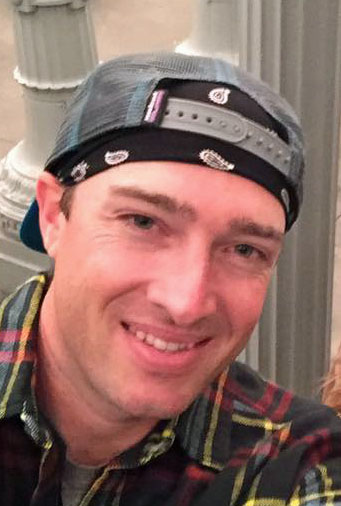
A couple dozen citizens gathered Monday evening for an “angelversary” to remember the life and death of Tyler Rushing, one year to the day after he was killed in a downtown shooting involving Chico police.
“It’s a very hard day for us,” said Scott Rushing of Ventura, Tyler’s father. Rushing said he expects to experience “a lifetime of trauma” over the killing of his only son on July 23, 2017. The shooting involved a private security guard and a Chico police sergeant.
In addition to Rushing and his wife Paula, in attendance at the commemoration were members and supporters of two other families who have had loved ones killed in officer-involved shootings in Butte County in the past 1½ years.
“I fight for them all because they all matter,” said Kat Lee, a member of the Justice for Desmond Phillips group. Phillips, a young black man in mental crisis, was shot 11 times on March 17, 2017, in his own living room by Chico police.
Much of the wrath of those who spoke was directed at District Attorney Mike Ramsey for what his critics describe as a law enforcement culture in the county in which deadly force is too readily employed without legal consequences for the involved officers.
“We’re going to bring Ramsey down together,” said Erica Traverso, also a Justice for Desmond Phillips activist.
Ramsey, the county’s top prosecutor for more than 30 years, was re-elected in June to a four-year term while running unopposed. Although Ramsey cleared the Chico policemen involved in the Phillips and Rushing deaths of any criminal wrongdoing, state Attorney General Xavier Becerra’s office is formally reviewing both shootings.
The Justice for Desmond Phillips group recently posted on Twitter its expectation that it would soon meet with officials from the state Attorney General’s office.
Ramsey said today the criticisms of him offer up a “false narrative.”
“There is no culture of using deadly force too readily,” he said. “When officers or the public are attacked and officers respond with deadly force, a full, fair and complete investigation is completed in each case.”
Monday’s invitation-only gathering hosted by the Rushings at Roots Catering on the Esplanade became something of a forceful coming out for the family of Myra Micalizio, a 56-year-old Palermo woman shot dead by two Butte County sheriff’s deputies on April 26. Ramsey has not yet issued a report on the Micalizio shooting. News outlets have reported that both deputies who fired their pistols, Charles Lair and Mary Barker, failed to activate their body-worn cameras.
Greg Abrew of Oroville, Micalizio’s brother-in-law, told Monday’s gathering of his reaction when he heard how she died.
“I said, ‘No way. She would never do anything against the police,’” Abrew said. “She was a loving person. It’s been rough on all of us.”
One of Micalizio’s nine siblings, Tommy Widener of Oroville, also condemned the circumstances of his sister’s death.
“Nobody should have to die like that,” he said. “Butte County’s going to hell.”
Another Micalizio sibling, Brenda Widener-Abrew, said she’s come to learn that “Butte County is littered with civilians” killed by law enforcement, and she thanked the group for their support.
“I haven’t had a voice since April because I didn’t know what to say or who to say it to,” she said. “I got a voice now with you guys backing it up.”
Emily Alma of Chico encouraged those in attendance to become involved with Concerned Citizens for Justice, which is working to create a citizen review board of police conduct in Chico.
“In my sadness and shock at Desmond’s murder … one goal is to transform the violent culture of law enforcement in Butte County,” Alma said.
Scott Huber, who’s running for Chico City Council in November, said he came to the remembrance at the Rushings’ invite after having expressed support as a candidate for greater police oversight.
The “One Year Without Justice for Desmond Phillips” gathering at the Chico Women’s Club on March 17 had dozens of hamburgers and hot dogs left over that were given out with fellowship and kindness at Chico’s downtown plaza by Scott Rushing and David Phillips, whose sons were both killed in shootings that involved Chico police officers.
Tyler Rushing was killed in July, 2017, after being shot by a security guard and police, and Desmond Phillips was killed by Chico police one year ago. — video feature by Guillermo Mash
Two Chico police killings in 2017 focus of inquiries
by Dave Waddell | Posted March 8, 2018
photo courtesy of Rushing family
Tyler Rushing
Over Mike Ramsey’s 30-plus-year tenure as Butte County district attorney, outside reviews of his rulings in officer-involved shootings have been, to use his word, “rare.” That dramatically changed in recent months as the office of state Attorney General Xavier Becerra is examining the facts and findings from two deadly Chico Police Department shootings in 2017.
A letter announcing a review of the July 23 shooting of Tyler Rushing has been made available to ChicoSol by his father, Scott Rushing of Ventura.
Earlier, David Phillips, father of Desmond Phillips, who was killed by Chico police last March 17, said he was told by Becerra personally that the AG’s office was investigating his son’s shooting.
Butte County District Attorney Mike Ramsey has absolved criminally the officers involved in the shootings. The AG’s review of the Phillips shooting began in “June or July,” Ramsey said.
The letter to Scott Rushing, dated Feb. 20, was signed for Becerra by Michael Canzoneri, supervising deputy attorney general.
“At your request, the Office of the Attorney General has officially opened a review of the facts and circumstances surrounding the officer-involved shooting and ultimate death of your son, Tyler,” says Canzoneri’s letter. “We are aware that the District Attorney for Butte County has already completed his review of the evidence and concluded no criminal charges should be filed against the officers involved. We have advised the District Attorney that we will be reviewing the evidence (that) was presented and his decision to not file charges. We have already requested, and anticipate receiving, the reports and digital evidence shortly.”
In a telephone interview with ChicoSol, Scott Rushing said “it’s just got to be extraordinary” for the AG to probe two shootings within four months involving the same police department.
“There must be something in the investigation of the two cases that has caught the attention of the attorney general,” Rushing said. “It’s just got to be rare that they would take a look at two officer-involved shootings in such a rural county. They just can’t willy-nilly investigate every request.”
In a follow-up email to ChicoSol, Rushing added: “We strongly feel an independent review of the evidence, away from the influence of the DA, will lead to the truth being told. I have always asked for the ‘unvarnished truth’ and my position has not changed. … Two Chico SWAT killings are now being reviewed: The killing of Desmond Phillips and the killing of Tyler. The family and friends of Desmond and Tyler have faith that these two investigations … will provide the transparency that has been absent in the Ramsey reports.”
David Phillips did not reply to messages to him seeking comment.
The AG’s press office issued its boilerplate “to protect their integrity we can’t comment on ongoing investigations.”
Ramsey said the AG’s office has the ability to review any case it wishes, but it happens only “occasionally.”
“They asked for me to send everything that we have (on the two cases), and I have done so,” Ramsey said. “Occasionally, someone (from the AG’s office) asks for some information, and that’s the last we hear of it.”
Chico State Professor Michael Coyle, an outspoken critic of the criminal justice system, when asked via email for his response to the multiple AG shooting reviews, replied: “I am of course delighted that the murder of any citizen by any agent of the state is under careful and serious investigation and review. The question I have is why in the second decade of the 21st century do we continue to support ‘wild west’ policy of state agents walking around shooting people – not to mention the mentally ill.”